Human resource management is changing as businesses adopt more digital tools to manage their workforce. HR teams are no longer dependent only on spreadsheets, paperwork, and manual records to understand employee information. Digital HR solutions can help organizations collect, organize, analyze, and use workforce data more efficiently.
One important part of this transformation is Digital HR Analytics. It helps HR teams turn employee and workforce data into useful insights that can support planning, performance management, recruitment, employee engagement, and other HR activities.
When HR teams have access to accurate and organized information, they can make decisions based on data rather than relying only on assumptions or limited observations, while apps4growth supports businesses in exploring digital solutions for more efficient HR and business processes.
What Is Digital HR Analytics?
Digital HR Analytics refers to the use of digital technologies and analytical methods to collect and evaluate HR-related data. This may include information about employees, recruitment, attendance, performance, training, compensation, turnover, and workforce planning.
Instead of looking at employee information separately across different systems, HR teams can use digital platforms to bring relevant data together and identify useful patterns.
For example, an organization may analyze employee turnover data to understand whether particular departments, roles, or periods have higher attrition. HR teams can then investigate the underlying factors and plan appropriate actions.
Why Data Matters in HR
HR teams make decisions that directly affect employees and business operations. These decisions can include hiring new employees, planning workforce requirements, evaluating performance, designing training programs, and improving employee retention.
Without reliable information, these decisions may depend heavily on assumptions or incomplete records.
Data can provide a clearer view of what is happening within the workforce. HR teams can use employee data to identify trends, compare performance indicators, monitor workforce changes, and understand areas that may require attention.
This makes data an important part of modern HR management.
How Digital HR Supports Data-Driven Decisions
Digital HR systems can support decision-making in several ways. From collecting employee information to generating reports, technology can make HR data easier to access and analyze.
1. Centralized Employee Data
Employee information is often spread across multiple systems, files, and documents. This can make it difficult for HR teams to find the information they need.
Digital HR platforms can centralize important employee data in one system. Depending on the software, this may include employee profiles, attendance records, performance information, leave details, training history, and other HR data.
Having centralized information can make it easier for HR professionals to access relevant data when making decisions.
2. Better Workforce Insights
Digital HR tools can help organizations identify patterns within their workforce data.
For example, HR teams can analyze:
- Employee turnover
- Absenteeism
- Recruitment performance
- Employee performance
- Training participation
- Workforce demographics
- Employee engagement
- Attendance patterns
These insights can help HR teams understand workforce trends and identify areas that may need further attention.
3. Improved Recruitment Decisions
Recruitment involves several stages, from sourcing candidates to onboarding new employees. Digital HR systems can help organizations track recruitment information throughout this process.
HR teams can monitor metrics such as time to hire, candidate sources, hiring stages, and recruitment costs. This information can help businesses understand which recruitment processes are working effectively and where improvements may be required.
Data can also help organizations plan future recruitment requirements based on workforce needs.
4. Better Employee Performance Tracking
Employee performance is another area where data can support HR decision-making.
Digital HR platforms can help organizations record performance goals, reviews, feedback, training activities, and other relevant information. HR managers can use these records to monitor employee development over time.
Instead of relying only on occasional performance reviews, organizations can maintain a more structured view of employee progress.
This can support discussions around training, development, career planning, and performance improvement.
5. Identifying Employee Turnover Trends
Employee turnover can affect productivity, recruitment costs, and workforce stability. Digital HR analytics can help businesses identify patterns related to employee departures.
HR teams may examine factors such as department, role, tenure, location, employee engagement, or other available workforce information.
The data does not automatically explain why an employee leaves, but it can help identify patterns that require further investigation.
This allows HR teams to move from simply reporting turnover numbers toward understanding workforce trends.
Supporting Employee Engagement
Employee engagement is another area where data can provide useful insights.
Organizations can use digital HR tools to collect information through employee surveys, feedback systems, participation data, and other engagement-related activities.
HR teams can review these insights to identify areas where employees may need additional support or where workplace processes could be improved.
For example, if survey results show concerns about communication or professional development, HR teams can investigate those areas and consider appropriate improvements.
Data-Driven Workforce Planning
Workforce planning involves ensuring that a business has the right people and skills for its future requirements.
Digital HR analytics can support this process by helping businesses understand their current workforce and identify potential future needs.
HR teams can review information related to employee skills, roles, workforce size, turnover trends, and business requirements.
This can help organizations plan recruitment, training, succession, and workforce development more systematically.
Using HR Dashboards and Reports
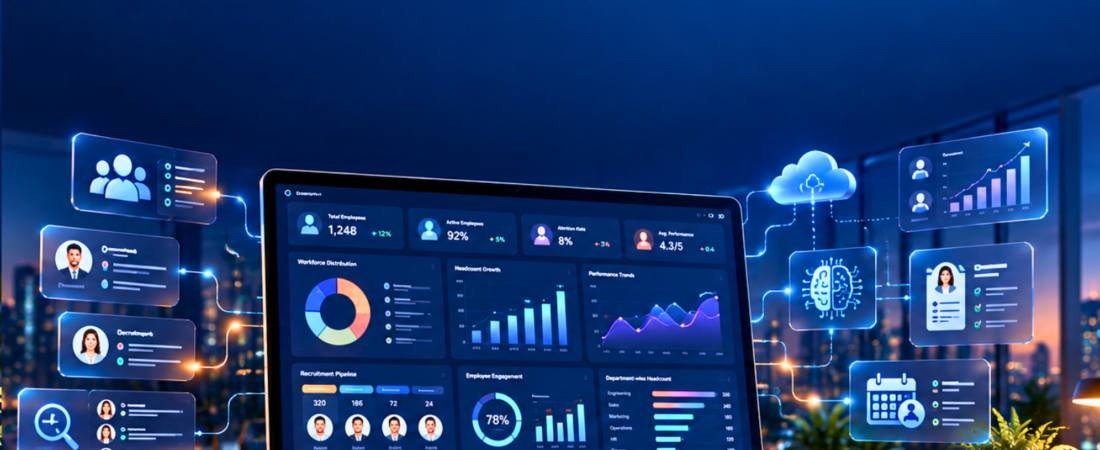
Modern HR software often includes dashboards and reporting features that make workforce information easier to understand.
Instead of reviewing large amounts of raw data, HR managers can use dashboards to view selected metrics and trends.
Common HR dashboard metrics may include:
- Headcount
- Employee turnover
- Absence rates
- Recruitment status
- Training participation
- Performance indicators
- Employee engagement metrics
These reports can provide HR teams and business leaders with a clearer view of workforce performance and changes.
Benefits of Data-Driven HR
Using data in HR decision-making can provide several potential benefits for organizations.
More Informed Decisions
HR teams can use relevant workforce information to support decisions instead of relying only on assumptions.
Improved Efficiency
Digital systems can reduce manual data collection and reporting work, allowing HR professionals to spend more time on strategic activities.
Better Workforce Planning
Organizations can use workforce trends to plan hiring, training, and employee development more effectively.
Improved Employee Experience
Insights from employee data and feedback can help businesses identify areas where workplace processes and employee support can be improved.
Greater Visibility
Centralized reports and dashboards can provide managers with a clearer understanding of workforce trends and HR performance.
Challenges of Using HR Data
Although digital HR provides many opportunities, organizations also need to manage data carefully.
Employee information can include sensitive and confidential details. Businesses should therefore pay attention to data security, access controls, privacy requirements, and responsible data usage.
The quality of insights also depends on the quality of the underlying data. Inaccurate, outdated, or incomplete information can lead to misleading conclusions.
HR teams should also avoid treating data as the only factor in every decision. Employee situations can involve context that may not be fully represented by numbers or reports.
Choosing the Right Digital HR Solution
Businesses should evaluate their HR requirements before selecting a digital HR platform. The right solution will depend on the organization’s size, workforce structure, processes, and technology environment.
Important features to consider may include:
- Employee data management
- HR analytics and reporting
- Recruitment management
- Performance management
- Attendance and leave management
- Employee self-service
- Integration capabilities
- Data security
- Scalability
- Ease of use
A solution should not only collect data but also make that information useful for HR teams and business leaders.
The Future of Data-Driven HR
As businesses continue to adopt digital technologies, HR teams are likely to use data more extensively in workforce planning and management.
AI, automation, analytics, and cloud-based HR platforms can provide new ways to organize workforce information and identify patterns. However, technology should support HR professionals rather than replace human judgment.
The most useful approach is to combine reliable data with business context, employee feedback, professional expertise, and responsible decision-making.
Conclusion
Digital HR Analytics can help organizations turn workforce data into useful insights for better HR planning and decision-making. From recruitment and performance management to employee engagement and workforce planning, digital HR systems can make important information easier to collect, organize, and analyze.
However, successful data-driven HR requires more than software. Businesses also need accurate data, appropriate security practices, clear processes, and responsible interpretation of employee information.
For businesses looking to modernize their HR processes, digital HR solutions can provide a structured foundation for using workforce information more effectively. apps4growth helps businesses explore digital technology solutions that can improve business processes, productivity, and long-term growth.